
AMD Radeon RX 6900 XT 16 GB — SOLD for C$350
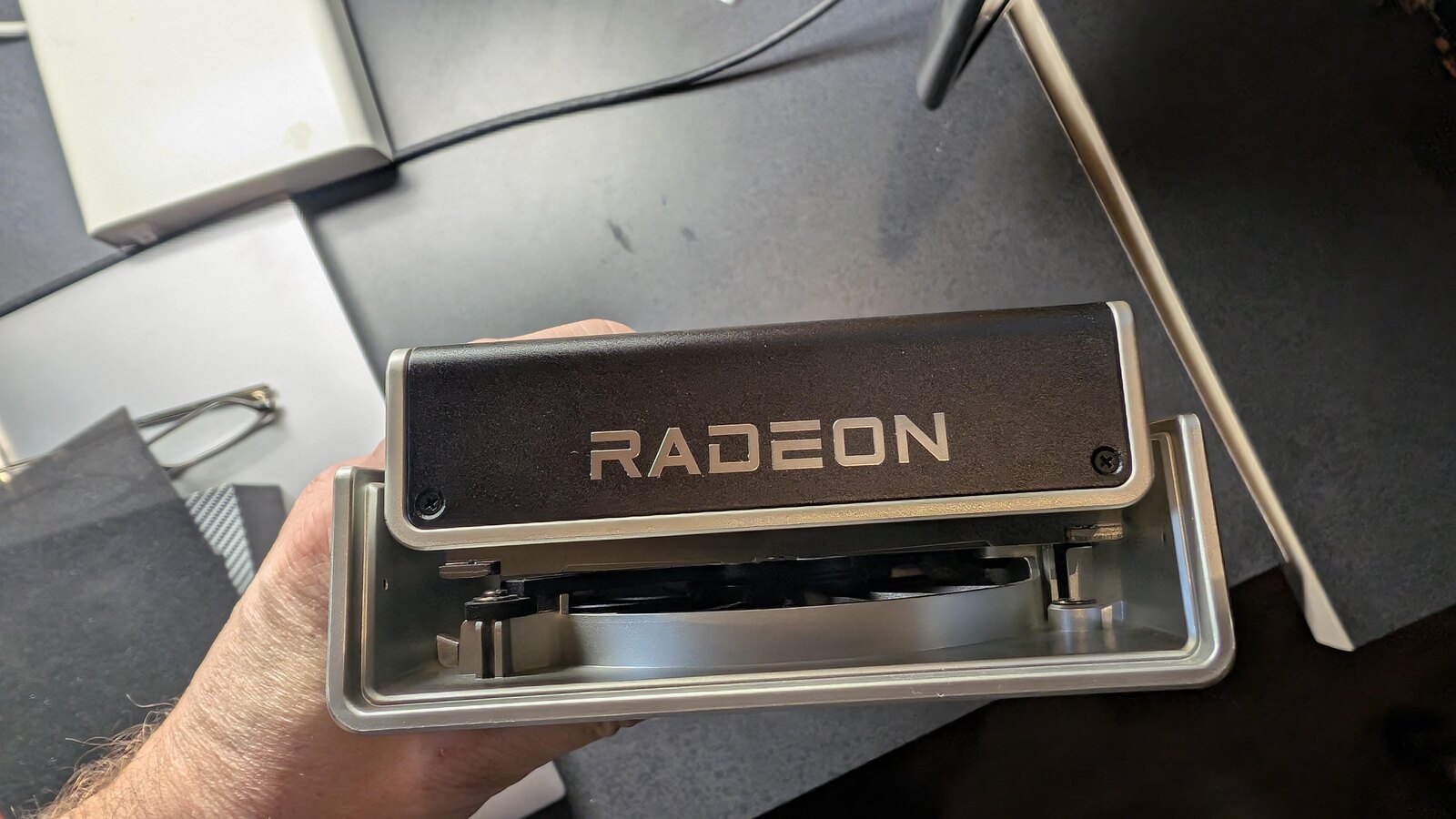
SOLD for C$350.
AMD Radeon RX 6900 XT, 16 GB GDDR6, factory-overclocked, three 8-pin power connectors, dual-BIOS. Sold as-is after disclosing that it detected fine but shut down once during a stress test while powered through a daisy-chained cable. Could be the cable setup, could be the card. The buyer had that disclosure, and the 7-day return still applied.
Listing closed. Thanks to everyone who expressed interest.
It would not fit in my Razer Core X eGPU enclosure — that has only two 8-pin connectors — so I needed a desktop to test it in.
I was getting ready to sell it to help fund other hardware. A working one was worth about C$600, so it was worth spending an afternoon proving it was healthy before listing it. The test found a problem. I listed it honestly as-is and sold it for C$350.
The test setup
My son’s PC, computer4, had an RX 6750 XT. I swapped the 6900 XT in and installed Omarchy (Arch + Hyprland) on the second drive. I unplugged his main drive during the install so there was no way to touch his system. A Bazzite live USB had shown a “no drivers” warning earlier; that was a red herring — AMD drivers are built into the Linux kernel.
Power came from a be quiet! Pure Power 12 M 1000 W (80 Plus Gold, ATX 3.x). The card was connected through a daisy-chained 8-pin cable. That detail matters, and I will come back to it. An older Seasonic Focus GX-850 was also on hand, but it was not the unit in use.
The plan was straightforward:
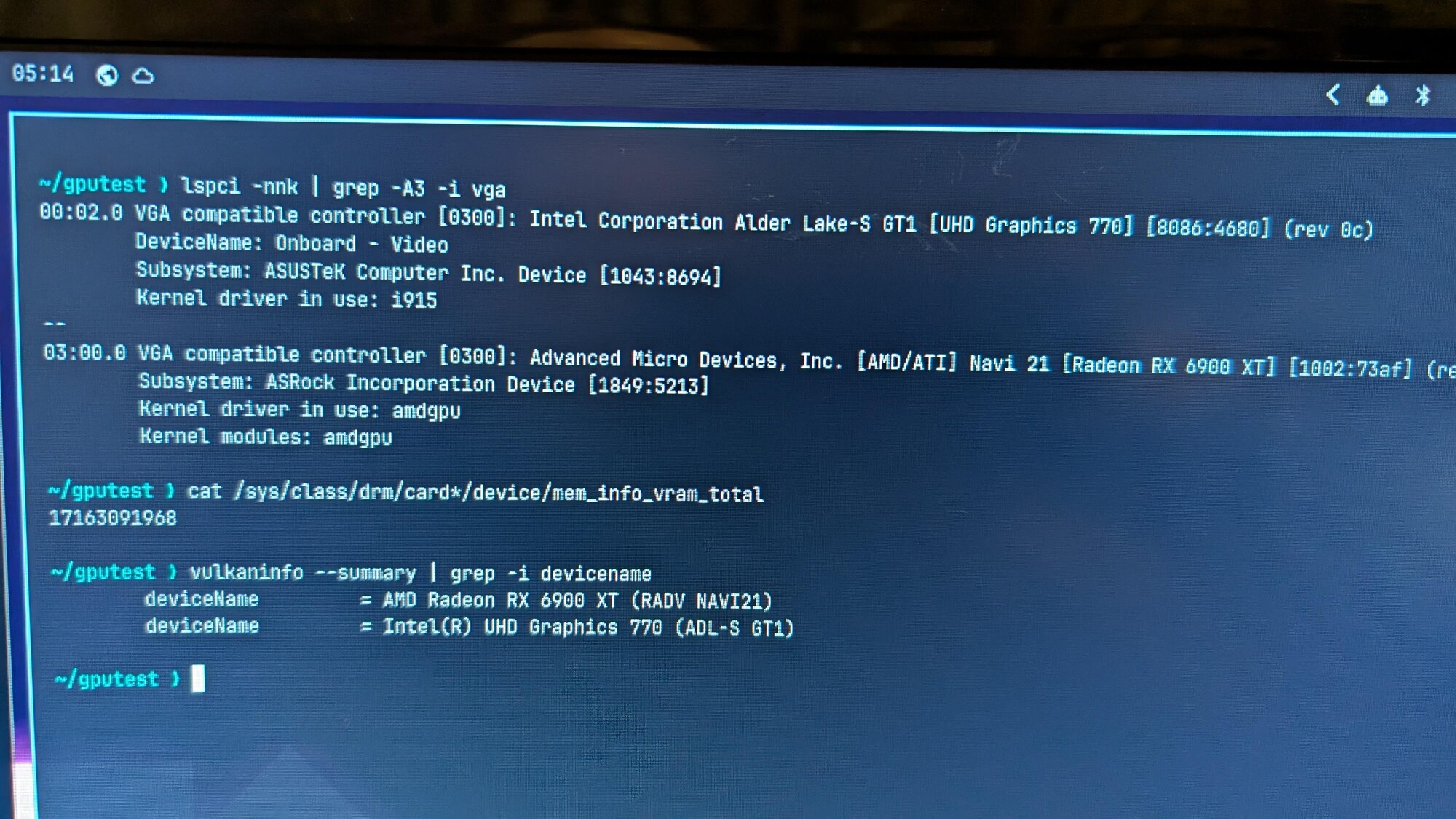
- Confirm detection with
lspci,vulkaninfoand the VRAM total in sysfs (should be 16 GB). - Watch
journalctl -kfor amdgpu errors andamdgpu_topfor temperatures, clocks and power. - Run memtest_vulkan for 20–30 minutes.
- Loop vkmark/glmark2 for 3D load.
- Run llama.cpp on Vulkan with greedy sampling three times and diff the outputs; then
llama-benchfor sustained compute.
I was looking for edge temperatures under 85 °C, hotspot under 100 °C and memory under 95 °C.
What happened
Detection was clean: the right model, 16 GB of VRAM, the amdgpu driver, and visible to Vulkan. Then, during memtest_vulkan, the whole PC powered off. Not a black screen, not a driver crash — the power cut out.
When I powered it back up, there was no display.
Photos
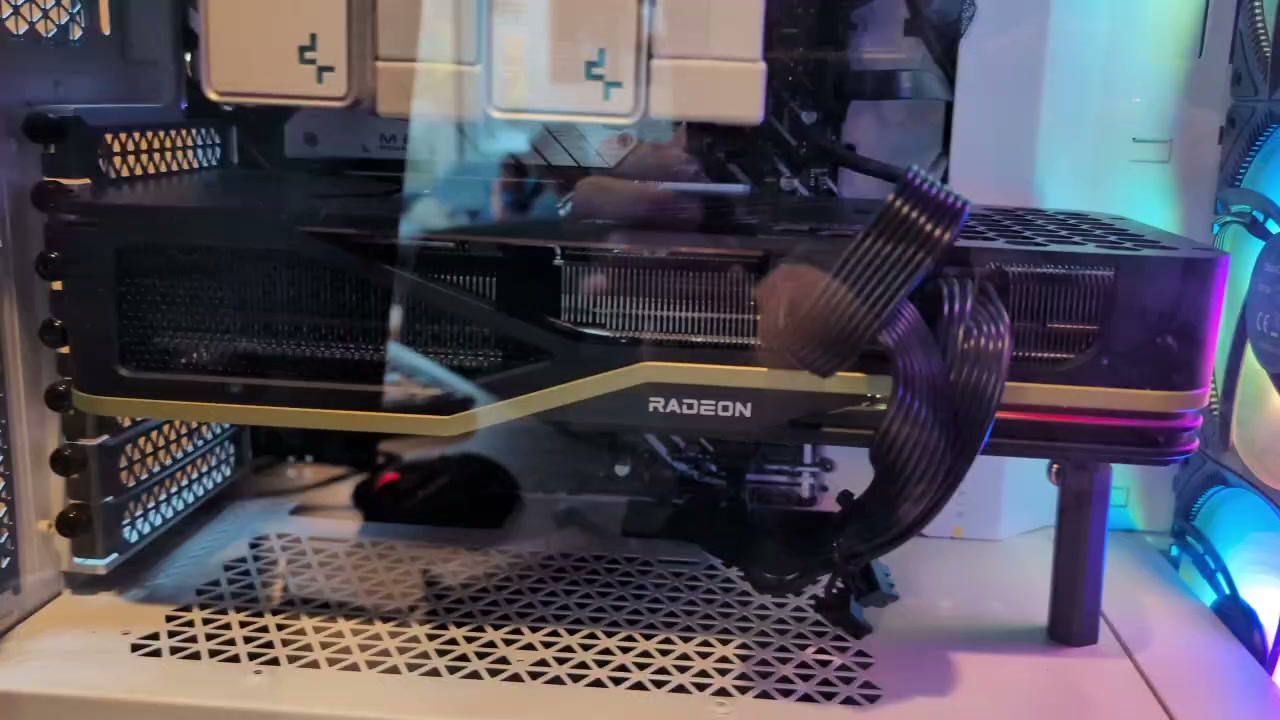
What it means
A sudden power-off under a memory stress test usually means the card pulled a burst of current, often from a failing memory chip or power stage, and the PSU’s protection cut power. A modern 1000 W ATX 3.x supply should not trip on a healthy 6900 XT’s power spikes. That, plus no picture afterwards, points at the card.
But I am not going to pretend that is proven. The card was on a daisy-chained cable, and I have not eliminated that. It could be the cable setup, it could be the card. I have not been able to fully retest it yet.
Before I listed it, the checks I would have done were: look and smell for scorching around the 8-pin sockets, try the other BIOS position and other outputs after a full power drain, retest with separate 8-pin cables, and put the 6750 XT back to confirm the PC was fine.
The sale
It sold as-is for C$350, with the shutdown disclosed and the 7-day return I offered. I did not do the full retest before selling it; the buyer knew that. If it had passed a full retest, it would have been a working card at around C$600; if it had stayed dead, it would have been a C$200 parts card.
What I would take away
- Test a used GPU under real load before selling or buying it. A card that boots and shows a desktop can still be faulty.
- memtest_vulkan is a quick, free VRAM test that runs on Linux and Windows.
- A deterministic llama.cpp run — same prompt, compare outputs — is a neat compute-stability check.
- Rule out the PSU and cables first. Older units can trip on RDNA2/RTX 30-series power spikes, and a daisy-chained cable is another variable.
- Install a test OS on a spare drive with the main drive unplugged, so you cannot wipe someone else’s system.
- Sell faulty cards honestly, as as-is or for parts. Project buyers and repairers still pay, and a clear disclosure is better than a buyer discovering the problem later.
The step-by-step test plan is here: Stress-testing a used GPU: Omarchy and the RX 6900 XT.
I would rather sell a card with a clear disclosure than have someone find out the hard way. It has sold — thanks to everyone who expressed interest.