
BlockApps “The Early Days of Ethereum” videos










Kieren James-Lubin, Victor Wong and James Hormuzdiar, the Co-Founders of BlockApps, have produced two videos in the last month or so reminiscing on the early days of Ethereum. The videos have been a delight for me to watch. While their journey overlaps with my own, I am learning some things which I did not already know. Their vantage point was slightly different to my own. Recording this history before it is forgotten is very important!


I spent several months in late 2017 and early 2018 putting together my own records of people involved in the Ethereum project in its early days, pre-Ethereum Foundation, and everybody within the EF to that stage, together with a timeline of links to blogs, photos and videos that I could find:
- Ethereum Foundation People (this one includes VIDEOS of all the attendees of DEVCON0)
- Ethereum Foundation Timeline
This was the most canonical information there was on the history of Ethereum at the time of writing, but that content was obsoleted by the later publication of three separate books covering that history.
… with Laura’s “The Cryptopians” getting closest to the truth, IMHO. That book has been optioned for a potential future dramatization.

There was also a book on ConsenSys which was a fun read, covering some of the same events as the Ethereum books, but with a focus on the internal dynamics of ConsenSys in its early days:
As I was watching these new videos from Kieren, Victor and James, lots of thoughts and comments came to mind for me. They were too verbose to capture as comments in LinkedIn and Twitter, so I’ve recorded them here for posterity.
Part 1 - Released on 28th August 2023
Jonathan Mohan is who you were thinking of 27 minutes in. He got nuked from the original Bitcointalk post along with others later in 2014 😔

So I don’t think that Roman Mandeleil was ever part of the Ethereum Foundation, but ethereumj was certainly a very important codebase in those early days. Here’s a video I made in June 2015 of Jarrad Hope‘s ethereumj-android fork running on my Galaxy S6. This client was embedded within their “Syng” product (later renamed to “Status”), aiming to be a decentralized WeChat equivalent “everything app” for hosting Ethereum applications. Check out Status.im.
Jarrad spoke about Status at DEVCON2:
As well as Serpent and LLL (Daniel Ellison wrote some great articles in 2017), a near-forgotten effort was Mutan from Jeffrey Wilcke (who is best known for building the Geth client).
At one stage there were 8 working clients:
- cpp-ethereum (C++, sometimes called Aleth or Turbo Ethereum)
- go-ethereum (Go, also known as Geth)
- pyethapp (Python)
- ethereumj (Java)
- ethereumH (Haskell, later BlockApps STRATO)
- ethereumjs (Javascript)
- Parity (Rust, later Parity-Ethereum, later openethereum)
- ruby-ethereum (Ruby)
The Ruby client was built by Jan Xie of Cryptape and the Python client was built by Heiko Hess of Brainbot. Both Cryptape and Brainbot were launch members of the EEA.
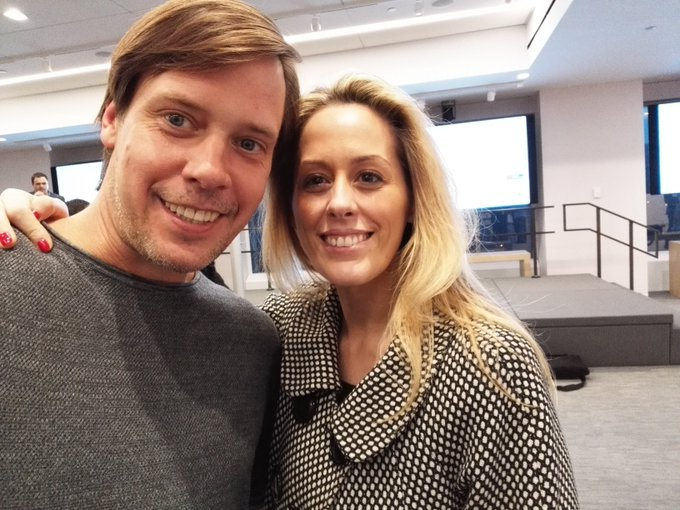 Heiko Hess with Vanessa Grellet at the EEA launch event.
Heiko built one of the first permissioned Ethereum clients, in the form of Hydrachain, which he demoed at DEVCON1 in London in late 2015.
Part 2 - released on 9th October 2023
“I think it was called Ethercamp”. This was Victor talking about the early Java client. That software was called ethereumj and was built by Roman Mandeleil and his team. Their company was called Ether.Camp, and as well as that client software they also had a browser-based editor called Ethereum Studio which was quite popular at the time. That ended up being part of the Microsoft BAAS offering. Ether.Camp also did a surprising collaboration with Santander called CashEth, which was announced at DEVCON2 in September 2016. Notoriously they also ran a hackathon which was seemingly gamed but the payouts still happened. Roman disappeared off the face of the earth not much later with many people thinking that he exit scammed. He’s still around on Facebook. Still alive but completely out of the blockchain ecosystem, it seems.
As the guys said, Microsoft were much more interested in the Java code than they were in BlockApps, but, to my understanding, Roman just shot himself in the foot on this opportunity, not being very interested for whatever reason.
Slock.it and the DAO - So the order of actions here got slightly garbled, I think, with the idea of Slock.it happening way earlier than any thought of a DAO. They announced the DAO at DEVCON1 because they genuinely wanted to put control in the hands of users rather than just run an ICO of their own. Even at the time of DEVCON1, I don’t think that DAO was intended to be for anything and everything. I think it was still single-purpose, to drip-feed funds to Slock.it as they delivered milestones. I need to drag Christoph Jentzsch in for the facts on that 🙂
Aside - Slock.it was likely inspired by an earlier project by John Gerryts called Airlock, which was launched in a hackathon. John and his partner on this project, Alex Leverington, did an interview with Stephan Tual, later a co-Founder of Slock.it.
” Has ETC hard-forked since?” - So yes, absolutely it has. In general ETC is tracking ETH changes, but without the DAO hard fork, still using POW indefinitely and with fixed monetary supply. Hard forks are not problematic in themselves - they are the means for upgrading the protocol. The issue is with contentious hard-forks which lead to chain splits. There have been no such further chain-splits on ETC, though technically any hard-fork results in a chain split - except that nobody cares about the “old side” and block production ceases. Somebody could still be mining Frontier if they wanted!
Mentioning Tyler Smith of BHP Billiton - Lovely guy. Don’t forget his earlier personal project, announced at DEVCON1 - “Free My Vunk” - an incredibly early NFT / gamefi proposal.
Victor as a guide in Shanghai for DEVCON2. Absolutely he was, and for me too! Both Victor and I were living in Vancouver at the time, but the first time I met him IRL was at the airport in Vancouver ready to board the flight to Shanghai. We also met Tim Coulter there, the founder of Truffle, who had flown up from Seattle to connect to the same flight. We ate together in Vancouver, then met on the other side of the flight in Shanghai. Victor helped me find a Chinese SIM card. I was planning on taking the high speed train but Victor seemed to know what he was doing so I jumped on the ConsenSys coach following his lead instead.

Matt Spoke enterprise group - So I don’t this is quite right. Matthew Spoke was certainly a leader within this earlier group of companies using Ethereum, but the Slack for that group was actually hosted by the Ethereum Foundation. Taylor Gerring was on there, Vitalik Buterin, George Hallam, Christian Reitweissner and myself. As well as Matt’s Nuco, you had Clearmatics, AMIS and a few others which I do not remember. I have some memory of Vitalik later saying that he had essentially dumped all the people who had asked him about enterprise uses of Ethereum in a new Slack and ran away! Maybe that was in Cryptopians? It sounds about right.

The Ethereum Foundation later come to the conclusion that enterprise uses of Ethereum were really outside of their mandate, and they did not want to dedicate any time to that, so ditched that group not so long after DEVCON2.
Matt held an enterprise get-together at the hotel venue for DEVCON2 and I attended that event as well, but I don’t think anybody else from the EF went. I tried to drag Taylor along, who had given talks on enterprise before (like this at DEVCON1 below), but he was not really interested in coming.
From what I remember, the initial proto-EEA group was actually formed around ConsenSys and their connections - Jeremy Miller doing lots of driving - with an initial intention of having a very small and active group (maybe only around 6 companies?), but then got this other larger group “merged” in ahead of launch, bloating up to 30 launch members.

John Wolpert was at DEVCON2 as well, along with Brian Behlendorf, but that at a time where IBM were still viewed somewhat as “the enemy”, but with the possibility of a grand union, if the C++ relicensing had worked out, alas. IBM’s timeline was oriented around a 1.0 launch of their blockchain offering not being later than R3’s launch of Corda, which was still several months away. There was a narrow window of opportunity for IBM to have built their 1.0 stack on top of Ethereum technology - dropping Fabric. There could have quite a different landscape if that had happened. With that option fading, the EEA came to life as a pragmatic alternative.


When was Quorum launched? So that was after DEVCON2 and before the launch of the EEA in February 2017. That was a collaboration between JPM and Jeff Wilcke, lead of the Geth team. Funnily enough, I don’t think Jeff even discussed this with Ming Chan, the Executive Director of the EF, ahead of time! There are large chunks of The Cryptopians dedicated to the saga of Ming Chan, so I will say no more here.

Quorum was (and still is) a permissioned fork of Geth which added private transactions and had an initial consensus mechanism using smart contract logic. Jeff has said that experimenting with that consensus mechanism was his main interest in the project. Samer Falah of JPM was very keen to meet me in Shanghai at DEVCON2 and I could not really understand why he was so keen to talk. Well, it was because they had been working on Quorum for months and were just about to launch it, but he could not say so at the time!

Quorum was indeed demoed at the EEA launch event. From what I remember there were intended to be two demos, both with combined efforts from two member companies. Maybe one financial and one supply chain? The Quorum demo was meant to include Tendermint consensus, but the Cosmos team got busy and never did the work. The longer-term consequence of that was that AMIS, another member company developed their Istanbul consensus instead, and that made it into Quorum and later into the EEA standard, which certainly did not make the Cosmos team happy, as they considered it inferior to Tendermint. Could have been a different timeline there!
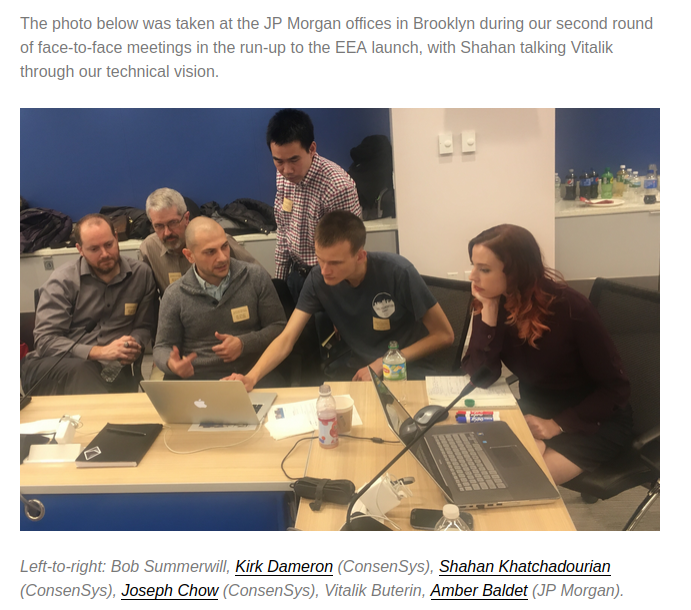
There were two major pre-EEA meetings (one, I think in December 2016 which I dialed into) and the second was in January 2017 and brought together a lot of people, as the guys mentioned, maybe 30-40 people first at JPM offices and then at Microsoft offices. I went to Brooklyn for that, staying in an Airbnb organized by Kirk Dameron, staying with Shahan Khatchadourian and Joseph Chow.
At the JPM office during that trip, Shahan and Amber Baldet showed Vitalik our technical plans for Enterprise Ethereum.
That January meeting was also where I first met Preston Byrne, who had made a snarky comment in Reddit about Monax not having been invited to the meetings, despite building the first permissioned Ethereum client, and Andrew Keys invited him.
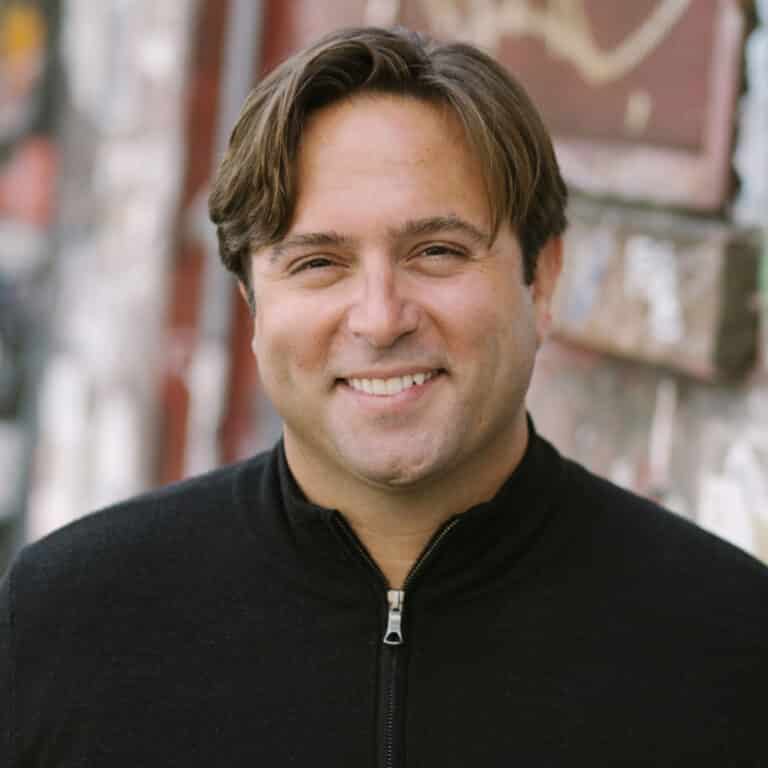
Vitalik was scheduled to be part of the EEA launch event on 28th February 2017, but then that was back-pedalled to just a video appearance, and then within the video he did not mention the EEA at all but talked in generalities about enterprise uses of Ethereum.
That was almost certainly under the influence of Ming Chan, the Executive Director of the Ethereum Foundation who was very strongly opposed to the creation of the EEA, which she saw as an attack on the EF and on Ethereum. She just hated Joe Lubin and ConsenSys too. That whole drama is covered well in Laura’s book. It was ongoing until her departure from that role in January 2018.
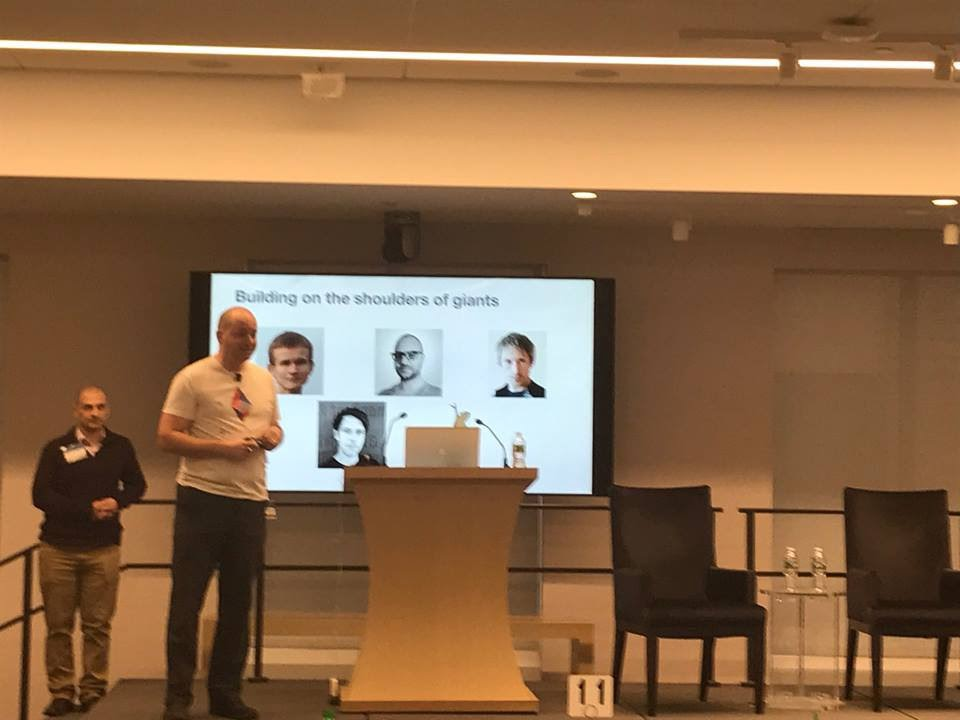
I posted a tweet-thread a year later on the one year anniversary of the launch event.
This blog post is massively longer than I originally intended, but there we are.
I look forward to the next video!